防烧 · 耐磨 · 抗弯 · 节能。四年多研发试验、六项核心技术,把寿命从 6 个月推到 12 个月以上,同时把冷却水带走的热量降下来。 Burn-resistant, wear-resistant, distortion-resistant and energy-saving. Over four years of development and six core technologies raise service life from 6 months to more than 12, while cutting the heat carried away by the cooling water.
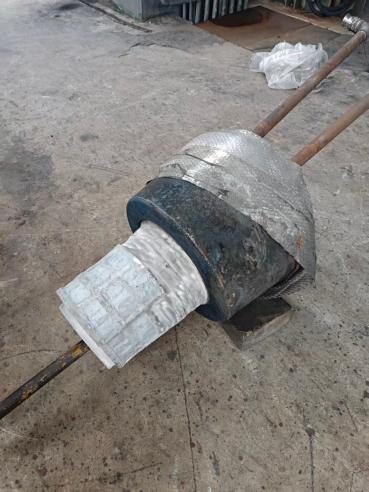
高炉风口小套是位于直吹管前端引导热风进入炉膛的零件,由紫铜铸造、焊接、加工而成。它伸进炉膛,外径面与出口端面直接承受高温烘烤,同时被高粉尘气流从内孔穿过。 The tuyere sits at the front of the blowpipe and directs the hot blast into the furnace. It is cast, welded and machined from pure copper. Projecting into the hearth, its outer diameter and outlet face take the full heat while dust-laden gas passes through its bore.
紫铜导热好、易加工,但熔点只有 1083℃,而滴落的液态铁水温度约 2000℃。这个温差决定了风口小套的失效方式:不是慢慢磨掉,而是接触瞬间就烧穿。 Copper conducts heat well and machines easily, but it melts at 1,083 ℃ while dripping liquid hot metal is around 2,000 ℃. That gap dictates how tuyeres fail: not by gradual wear, but by burning through on contact.
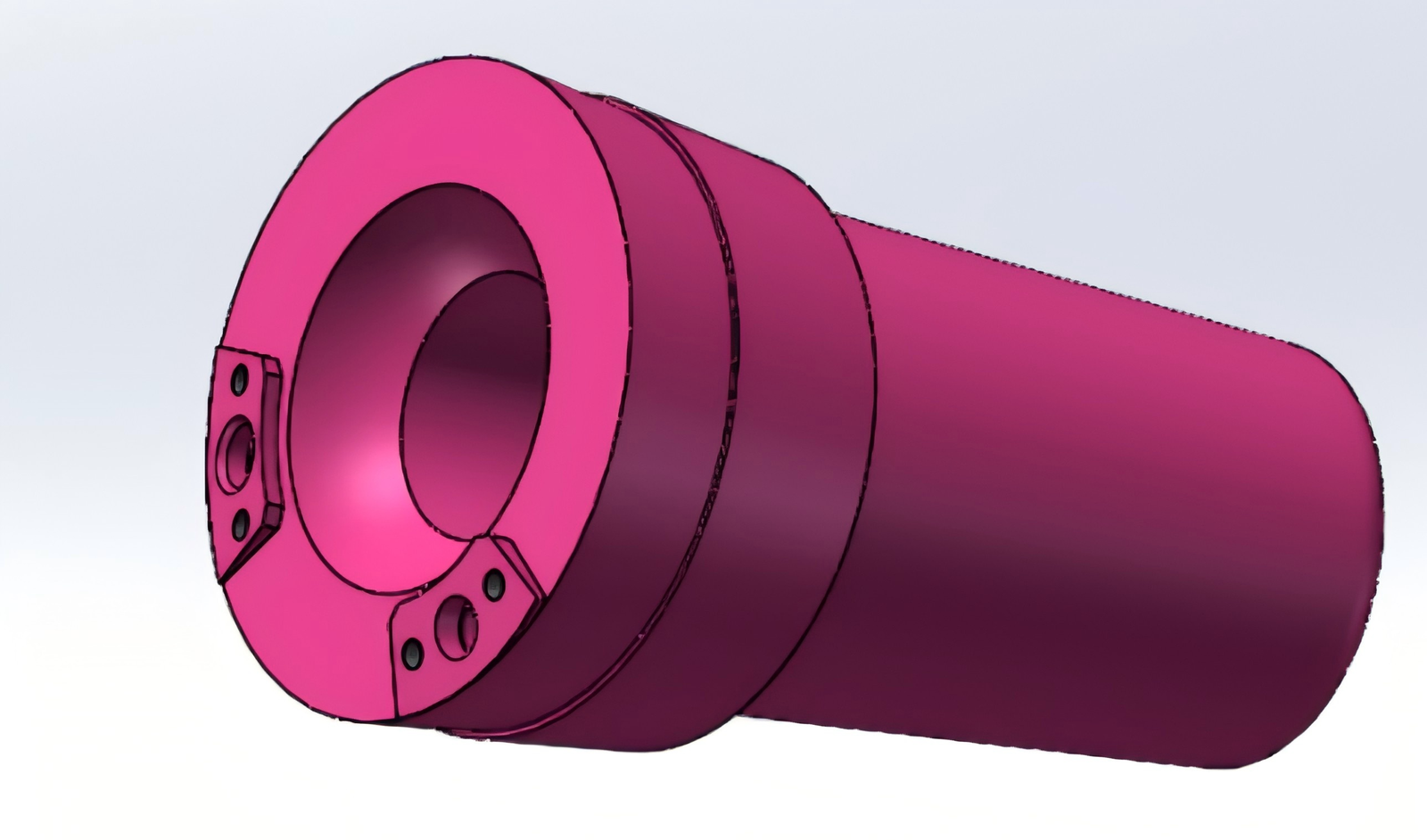
把失效拆开看,才知道该在哪个部位加什么。下面每一条都对应后面一项具体的技术改进。 Only by separating the failure modes does it become clear what to add and where. Each item below maps to a specific design improvement further down.
2000℃ 高温液态铁水滴在小套上,接触瞬间传热让紫铜由外表面平衡温度点快速升到 1083℃ 以上,紫铜熔化。这是易烧损的主要原因。 Liquid hot metal at 2,000 ℃ drips onto the tuyere; heat transfer on contact drives the copper from its outer-surface equilibrium temperature past 1,083 ℃ and it melts. This is the principal cause of burning.
紫铜熔点 1083℃Copper melts at 1,083 ℃风口小套顶部焦炭产生滑移,摩擦导致顶部表面磨损。 Coke sliding across the top of the tuyere abrades the upper surface.
气流吹入炉膛时,射流形成涡流影响区,小套端面受高粉尘气流冲刷而磨损。 As the blast enters the hearth the jet forms an eddy zone at the outlet face, which is then eroded by the dust-laden gas.
风口小套安装存在偏差时,热风气流方向与风口内孔道方向不一致,高粉尘气流冲刷到靠出口的内壁上,导致快速磨损。 Where the tuyere is installed off-line, the hot blast direction does not match the bore axis, so dust-laden gas is driven onto the bore wall near the outlet and wears it rapidly.
高炉渣皮脱落直接砸在风口上。紫铜材质较软,高温下强度显著下降、抗变形能力减弱,强大的冲击力造成风口变形弯曲。 Falling accretions strike the tuyere directly. Copper is relatively soft and loses strength at high temperature, so its resistance to deformation falls and the impact bends it out of shape.
小套伸入炉膛内,高温烘烤外径面与出口端面,大量热量通过紫铜壁被冷却水带走;高温气流通过内孔,热量又经内孔壁带走,温升 6-8℃。 With the tuyere projecting into the hearth, heat bakes its outer diameter and outlet face and passes through the copper wall into the cooling water; hot gas through the bore adds more. The resulting rise is 6–8 ℃.
温升 6-8℃ 全是损失A 6–8 ℃ rise is pure loss为解决易烧损、耐磨性差、使用寿命短、热能损耗大的问题,技术研发部门经过两年多的研发试验,对风口小套采取以下技术改进方案。 To address burning, poor wear resistance, short service life and high heat loss, our development department carried out over two years of development and trials, adopting the following improvements.
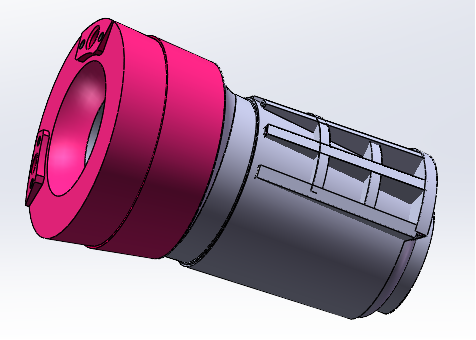
小套顶部前端 1/2-2/3 区域设置一个防烧耐磨高强盔甲,解决烧损、磨损及冲击弯曲问题。 High-strength burn- and wear-resistant armour covers the front 1/2 to 2/3 of the crown, addressing burning, wear and impact distortion together.
小套出口端部设置一个耐磨环,解决涡流冲刷的磨损问题。 A wear ring at the outlet end addresses eddy erosion.
风道出口前端内壁做耐磨增强层,解决带煤粉高速气流的冲刷问题。 A wear-resistant layer on the bore wall ahead of the outlet addresses erosion by the high-velocity, coal-laden gas.
小套其它内、外表面做隔热层,减少热输入,大幅降低冷却水带走的热量,实现节能。 A thermal barrier on the remaining inner and outer surfaces cuts heat input, substantially reducing the heat carried away by the cooling water and so saving energy.
涂层要同时做到三件事:挡住 2000℃ 的瞬时接触、在 1400-1600℃ 长期不脱落、和紫铜基体牢固结合。任何一项不成立,整个方案就不成立。 The coating has to do three things at once: block momentary contact at 2,000 ℃, stay put for the long term at 1,400–1,600 ℃, and bond firmly to the copper substrate. If any one fails, the whole approach fails.
小套高温抗弯曲能力增强技术,应对渣皮脱落的冲击载荷。 Enhanced resistance to bending at high temperature, standing up to the impact load of falling accretions.
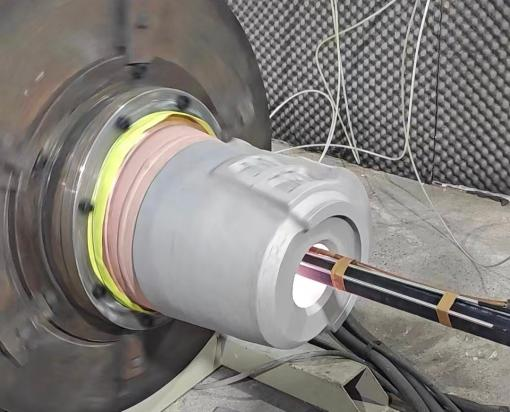
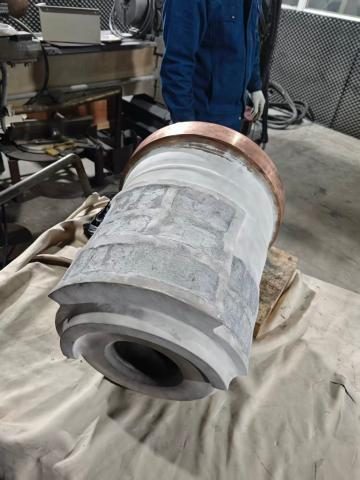
按此方案制造的风口小套,已于 2025 年 12 月 27 日安装在珠海粤裕丰 4# 和 6# 高炉风口使用,至今正常使用。 Tuyeres built to this design were installed on 27 December 2025 at the No. 4 and No. 6 blast furnaces of Zhuhai Yueyufeng, and remain in normal service.
| 指标Metric | 改造前Before | 改造后After |
|---|---|---|
| 冷却水温升(同流量)Cooling-water temperature rise (same flow) | 6-8 ℃ | 2-4 ℃ |
| 使用寿命Service life | 约 6 个月about 6 months | 12 个月以上(目标 24 个月)over 12 months (target 24) |
| 每月能耗Monthly energy cost | 热量经冷却水全部带走Heat entirely carried off by cooling water | 降低 3-5 万元RMB 30,000–50,000 lower |
按降温 2℃、单小套冷却水量 40t/h 计算,每月降低能耗 5 万元。设计使用寿命 12 个月以上、目标寿命 24 个月,可大幅减少风口更换工作量,降低高炉故障休风时间,提高高炉炼铁产量。 At a 2 ℃ reduction and 40 t/h of cooling water per tuyere, the saving is RMB 50,000 per month. With a design life of over 12 months and a target of 24, replacement work falls sharply, unplanned stoppages shorten and hot metal output rises.
给出高炉容积、风口数量、当前风口小套的更换周期与失效形式,以及冷却水量和进出口温差,我们会给出寿命评估与节能测算。 Send us your furnace volume, number of tuyeres, current replacement cycle and failure mode, along with cooling-water flow and inlet/outlet temperature difference, and we will return a life assessment and energy-saving calculation.
索取寿命与节能评估Request an assessment